SCHEDULE AN EVALUATION
 Call Us Now
 Email Us Now


Understanding When a South Carolina Marriage Can Be Declared Invalid
Key Takeaways: An annulment declares that a valid marriage never existed, granted only on narrow grounds: bigamy, lack of capacity, fraud going to the essence of marriage, duress, and for voidable marriages, absence of consummation or cohabitation. A short marriage or regret alone is insufficient. Key statutes include S.C. Code § 20-1-80 on bigamous marriages, § 20-1-90 protecting children’s legitimacy, and § 20-1-100 voiding marriages by persons under sixteen. Stone v. Thompson (2019) prospectively ended common law marriage. The process starts with a Complaint for Annulment in Family Court, for Rock Hill residents in York County. An experienced Rock Hill family law attorney can assess whether your circumstances qualify.
An annulment treats a marriage as though it was never legally valid, granted only in limited circumstances. You must prove a recognized legal ground such as fraud going to the essence of marriage, duress, bigamy, or lack of capacity. For voidable marriages, South Carolina courts also require that parties never consummated the marriage or cohabited afterward. Simply being married briefly, regretting the decision, or living apart is insufficient.
If you’re considering an annulment in SC and want to know whether your situation may qualify, The Howze Law Firm LLC is ready to listen. Call 803-266-1812 to discuss your circumstances, or reach out to our team now to schedule a confidential consultation.
Why an Annulment Differs From a Divorce
A divorce ends a marriage that was legally valid, while an annulment declares that no valid marriage ever existed. That distinction matters because the legal standards are entirely different. A divorce may be granted on grounds such as one year’s continuous separation, adultery, physical cruelty, or habitual drunkenness, but an annulment requires proof that something was defective when the marriage was formed.
This difference also shapes available relief. Because an annulled marriage is treated as void or voidable from inception, equitable division of marital property and alimony are generally unavailable or sharply limited. Courts examine the circumstances surrounding the ceremony itself rather than what happened later.
| Feature | Annulment | Divorce |
|---|---|---|
| Legal effect | Marriage treated as never valid | Valid marriage terminated |
| Typical proof | Defect existing at formation | Statutory fault or separation |
| Availability | Limited circumstances only | Broader statutory grounds |
| Filing court | Family Court | Family Court |
The Recognized Grounds for Annulment SC Courts Consider
South Carolina recognizes a narrow set of circumstances that may render a marriage void or voidable. Each ground carries its own evidentiary burden, and courts interpret these categories narrowly. The most commonly raised grounds include:
- Bigamy: a marriage entered while either party still has a living spouse
- Lack of capacity: including age, mental incapacity, or incapacitation at the ceremony
- Fraud: misrepresentation going to the essence of the marital relationship
- Duress: consent obtained through coercion or threat
- Non-consummation: treated by South Carolina courts as a prerequisite for annulling a voidable marriage
Not every misrepresentation qualifies as fraud. Courts distinguish between fraud going to the essence of marriage, such as concealing inability or unwillingness to have children or a hidden existing marriage, and disappointments about finances, personality, or habits.
Bigamy and Void Marriage South Carolina Law
Bigamy is among the clearest statutory grounds for invalidating a marriage. Under S.C. Code § 20-1-80, "All marriages contracted while either of the parties has a former wife or husband living shall be void," subject to limited exceptions including where a spouse has been absent for five years without the other party knowing whether they were living, or where the prior marriage was dissolved or declared void. Because a bigamous marriage is void rather than voidable, it may be challenged even where parties lived together. Review the governing statutory chapter through the South Carolina marriage statutes.
South Carolina law addresses children of bigamous marriages. Under S.C. Code § 20-1-90, where a party entered the marriage in good faith and in ignorance of the other’s incapacity on or after April 13, 1951, children of that marriage are deemed legitimate with the same rights as children born in lawful wedlock.
💡 Pro Tip: If you suspect bigamy, preserve documentation early. Marriage licenses, prior divorce decrees, and correspondence may become central evidence.
Age, Capacity, and Marriages Void From the Start
Some marriages are invalid from the moment they occur. S.C. Code § 20-1-100 provides that "Any person under the age of sixteen is not capable of entering into a valid marriage, and all marriages hereinafter entered into by such persons are void ab initio." South Carolina amended its licensing statutes in 2019 to close a loophole that had allowed judges to issue marriage licenses to minors of any age in cases of pregnancy, clarifying that the minimum age to marry is 16 with parental consent.
Capacity claims involving mental condition or intoxication are more fact-intensive. A party must show that at the time of the ceremony, they lacked the ability to understand the nature and consequences of the marriage. Such marriages are typically voidable rather than void, so courts may consider whether parties continued living as spouses after capacity returned, which can amount to ratification and defeat the claim.
How Common Law Marriage Changed the Analysis
A significant shift in South Carolina law affects how validity questions are analyzed today. In Stone v. Thompson, decided July 24, 2019, the South Carolina Supreme Court held that going forward, parties may no longer enter into a valid marriage without a license. Commentary on the prospective abolishment of common law marriage published in the South Carolina Law Review explains the reasoning and practical consequences.
The ruling was expressly prospective. For couples who never obtained a license after July 2019, the question may not be annulment at all, since no marriage may have formed. A careful timeline review is generally warranted before filing.
Filing for an Annulment in SC: What the Process Involves
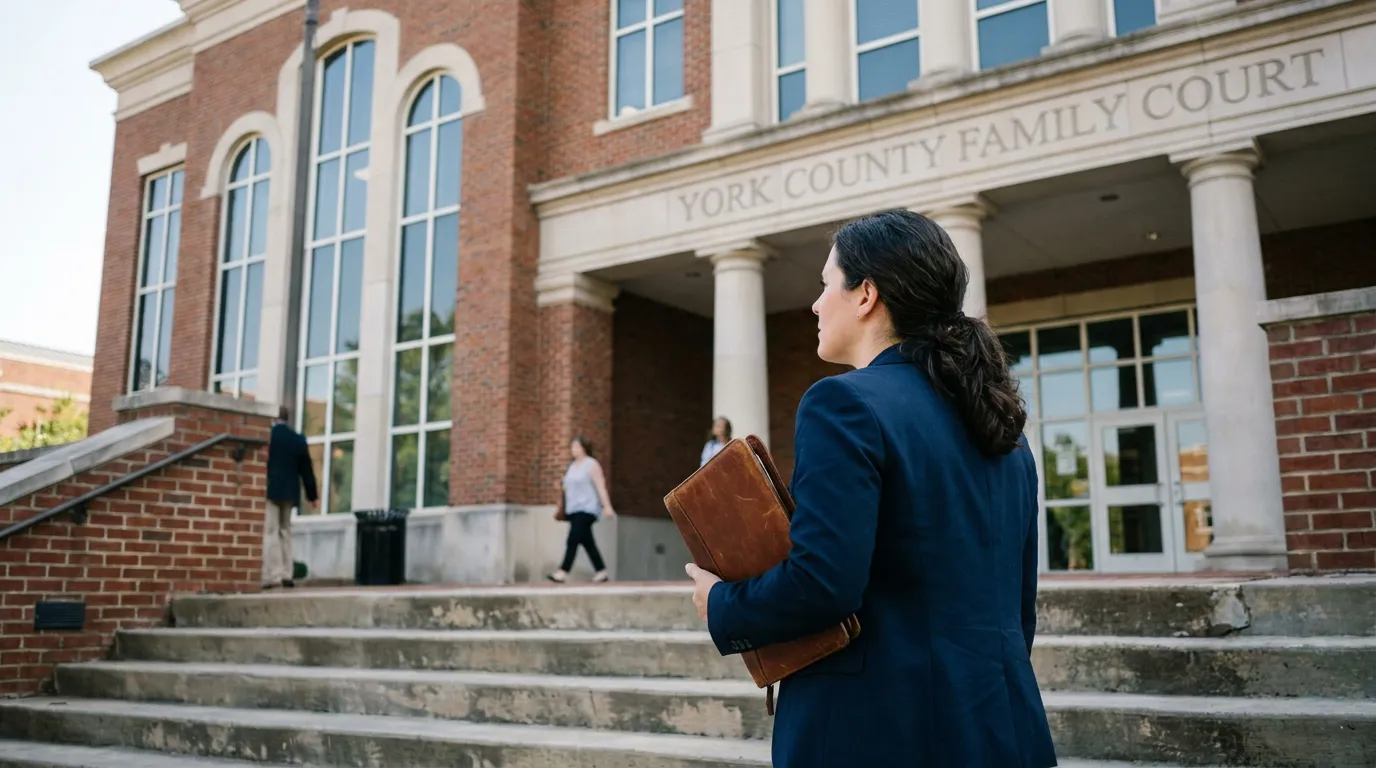
The process begins with a Complaint for Annulment filed in the Family Court where either spouse lives. For Rock Hill residents, that generally means York County family court. The complaint must clearly state the legal basis for annulment and supporting facts.
Service of process on your spouse is required. If your spouse cannot be located, S.C. Code § 20-1-550 permits service by publication under §§ 15-9-710 and 15-9-740, with strict procedural requirements including a diligent search first.
Residency also matters when the wedding took place elsewhere. Under § 20-1-550, publication service is available to a plaintiff whose marriage occurred outside South Carolina if the plaintiff was a resident at the time of marriage or has resided in the state for at least one year before filing.
Locating the Correct Court Forms
Official forms are available through the state judiciary. The University of South Carolina School of Law library maintains a forms index organizing documents from the SC Judicial Department. Reviewing the South Carolina court forms index is a reasonable starting point.
That resource is deliberately limited in scope. It states you must decide which form to use, and the library cannot help you choose or fill out forms. Selecting and completing correct pleadings is where self-represented parties most often encounter trouble, which is one reason many choose to consult a lawyer before filing.
Practical Challenges to Expect in Family Court
The most common obstacle is discovering that no recognized ground applies. If none of the statutory or common-law grounds fit your facts, divorce is generally the appropriate path. Learning that early is better than investing months in a filing the court cannot grant.
Evidence is the second recurring challenge. Fraud and duress claims often rest on private conversations with no witnesses, so contemporaneous texts, emails, and testimony from family members carry real weight. Courts also weigh whether parties consummated the marriage or continued cohabiting after discovering the alleged defect, which frequently defeats a voidable-marriage claim.
Working With a Marriage Annulment Attorney in Rock Hill
Annulment cases reward preparation, and an experienced family law attorney in Rock Hill can help you assess whether your facts fit a recognized ground before you file. Our firm handles these matters alongside the full range of family law attorney Rock Hill services, including custody, support, and property matters that may still need resolution even when a marriage is declared void.
The Howze Law Firm LLC received the Best of 2026 Award from Business Rate, recognizing service to clients throughout Rock Hill. That recognition reflects a commitment to clear communication and thorough preparation. Every case turns on its own facts, and no outcome can be promised, but understanding your position from the outset generally leads to better decisions.
Frequently Asked Questions
1. How long do I have to file for an annulment in SC?
South Carolina does not impose a single fixed statutory deadline for every annulment ground, and timing rules vary depending on whether the marriage is void or voidable. Equitable defenses such as laches or ratification may apply. Waiting may weaken a voidable-marriage claim, particularly if parties continued living together after learning of the defect.
2. Does a short marriage qualify for annulment?
No. Duration alone is not a ground. You must prove fraud, duress, bigamy, or lack of capacity, and for voidable marriages show parties did not consummate or cohabit afterward. A brief marriage without such defects would require a divorce instead.
3. What happens to children if my marriage is declared void?
Under S.C. Code § 20-1-90, children of a marriage void under § 20-1-80 are deemed legitimate where a party entered in good faith and in ignorance of the other’s incapacity, on or after April 13, 1951. Custody and support are addressed under standard family court principles.
4. Can I annul a marriage that took place in another state?
Possibly. S.C. Code § 20-1-550 contemplates actions by plaintiffs whose marriages occurred outside South Carolina where the plaintiff was a resident at the time of marriage or has resided in the state for at least one year before filing. Validity is often judged by the law of the state where the ceremony occurred.
5. What if my spouse cannot be found?
Service by publication may be available under § 20-1-550, applying §§ 15-9-710 and 15-9-740. Courts generally require a showing of diligent efforts to locate the defendant first.
Moving Forward With Confidence
South Carolina annulment law is narrow by design. Bigamy under § 20-1-80, age-based incapacity under § 20-1-100, fraud, duress, and the consummation and cohabitation requirements applied to voidable marriages represent the recognized paths, each with its own proof requirements. Procedural rules governing filing, service, and residency add another layer, and outcomes depend on specific facts presented to the court. If no ground applies, divorce remains available.
You don’t have to sort through these annulment requirements SC imposes on your own. Contact The Howze Law Firm LLC by calling 803-266-1812, or request your consultation today to talk through your options with a team that understands York County family court.