SCHEDULE AN EVALUATION
 Call Us Now
 Email Us Now

Understanding Your Protection Options Against Anyone Who Threatens You
Key Takeaways: Yes, a restraining order can be filed against a non-household member in South Carolina because it focuses on the offender’s harassing or stalking conduct rather than your relationship to them. Unlike an Order of Protection, which is reserved for abuse within domestic relationships and handled in Family Court, a restraining order requires no relationship with the offender and is filed in Magistrate Court. The conduct must rise to harassment or stalking and form a pattern of two or more acts. There is no upfront filing fee, though the losing party pays a $55 fee after the hearing, and the order remains enforceable statewide for at least one year. Violating a restraining order is a criminal offense that can lead to arrest. Careful documentation and guidance from a knowledgeable advocate can strengthen your case.
Yes, a restraining order can be filed against a non-household member in South Carolina. Unlike an Order of Protection, which is reserved for abuse involving people in close domestic relationships, a restraining order focuses on the offender’s conduct rather than your connection to them.
You can get a Restraining Order against anyone who is harassing or stalking you, including family members, boyfriends or girlfriends, strangers, or anyone else.
That distinction matters greatly for anyone in Rock Hill being targeted by someone outside their home.
If you are facing harassment or stalking, the team at The Howze Law Firm LLC is ready to listen. You can reach out through our contact page or call us directly at 803-266-1812 to discuss your situation and protective options.
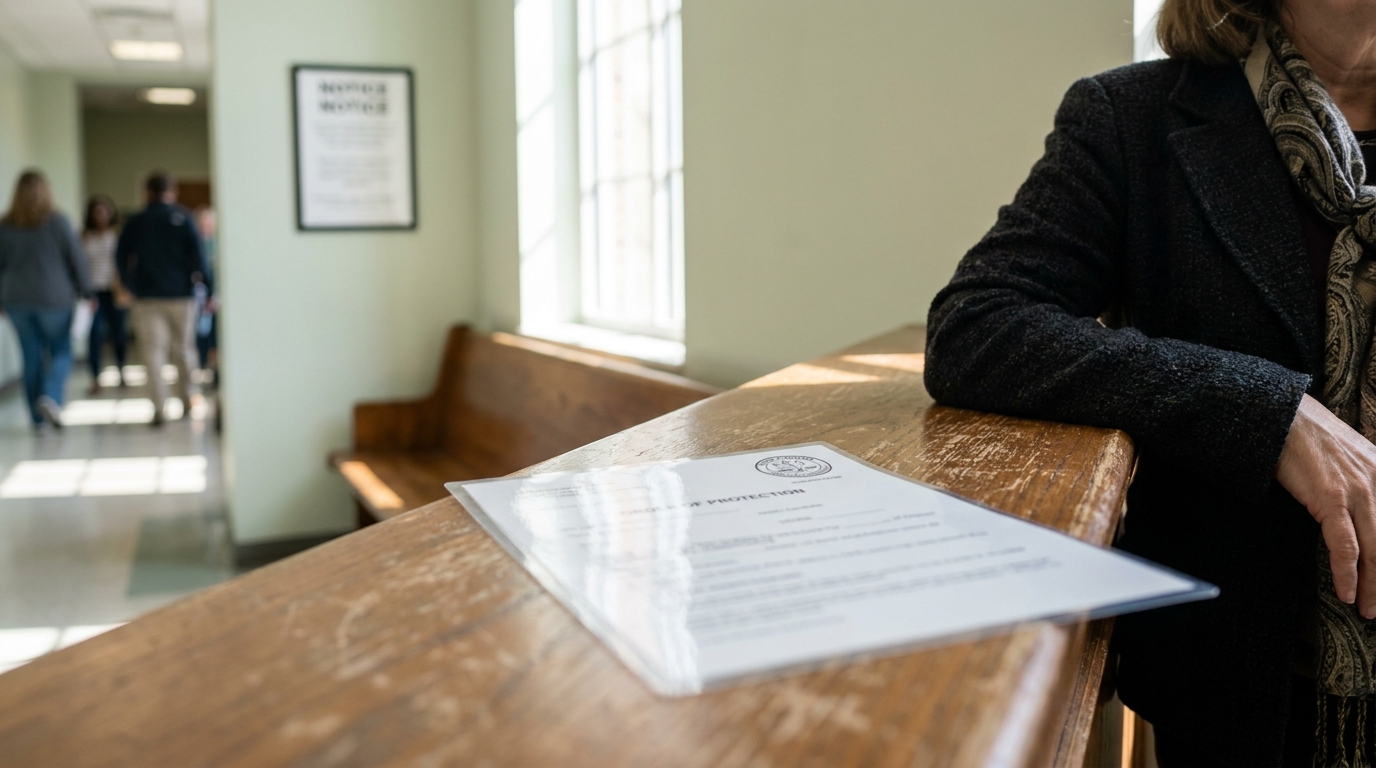
Two Different Tools: Restraining Orders Versus Orders of Protection
Restraining orders and orders of protection are frequently confused, yet they serve different legal functions in South Carolina.
The terms are used interchangeably, but they refer to different types of orders issued by different judges for your protection.
Knowing which applies to your circumstances is the first step toward securing meaningful safety.
An Order of Protection is tied to a specific relationship.
Order of Protection applies to a person who is being physically harmed, threatened with physical harm, or sexually harmed by a current or former spouse, a co-parent, or someone they live with.
These orders are
filed through the Family Court system, with forms and a manual provided by SC Legal Services.
A restraining order removes the relationship requirement entirely.
Restraining Orders in SC do NOT require any relationship with the offender, making them the mechanism for protection against non-household members.
The law puts the spotlight on the behavior, so
anyone can file a Complaint and Motion for a Restraining Order, there is no specific relationship required between the victim and the offender, and the focus is on the conduct, not the type of relationship between the parties.
For a deeper look at protective relief when the abuser is a spouse, our discussion of how to seek protection from an abusive spouse in Rock Hill covers that related scenario.
💡 Pro Tip: Before you file, write down dates, times, locations, and descriptions of each incident. A clear timeline helps a judge see the pattern that the law requires.
Where and How to Get a Restraining Order in South Carolina
To get a restraining order against a non-household member, you file in Magistrate Court rather than Family Court.
Pursuant to §16-3-1750(A), the magistrates court has jurisdiction over an action seeking a restraining order against a person engaged in harassment in the first or second degree or stalking.
This is why the magistrate route is the proper remedy when the person harming you is not a spouse, co-parent, or someone you live with.
The conduct must rise to the level the statute describes.
Restraining Orders are available in Magistrate Court to protect anyone experiencing harassment or stalking, as defined by South Carolina law, and no relationship with the offender is required.
The behavior must form a pattern.
Under §16-3-1700(D), pattern means two or more acts occurring over a period of time, however short, evidencing a continuity of purpose.
Filing does not require an upfront payment.
It does not cost anything to file a Complaint and Motion for a Restraining Order, but the Court does charge a $55 fee at the end of a Restraining Order case.
In practice,
no fee is required at the time of filing; however, the losing party will be required to pay the $55 filing fee after the hearing.
For a plain-language overview of the process, the statewide guide to restraining orders from South Carolina Legal Services walks through the basics. For the plaintiff’s perspective on completing forms, the University of South Carolina’s restraining order plaintiff resources can be a helpful starting point.
💡 Pro Tip: Keep copies of every text message, voicemail, email, or social media contact. Two or more documented acts can help establish the "pattern" element the statute demands.
What a South Carolina Restraining Order Actually Does
Once granted, a restraining order carries real legal weight across the entire state.
A restraining order remains in effect for a fixed period of time of not less than one year under §16-3-1750(E) and (F), and is enforceable throughout this State.
That statewide reach means the protection follows you whether you are in Rock Hill, traveling for work, or visiting family elsewhere in South Carolina.
Enforcement can differ in practice from an Order of Protection.
An Order of Protection can often be enforced quickly because law enforcement must respond to violations, and the offender may be criminally charged.
Violating a restraining order is a criminal offense that can result in arrest under South Carolina law, though in some cases enforcing it may involve returning to court. Understanding this contrast can shape your safety planning.
Here is a simplified comparison:
| Feature | Restraining Order | Order of Protection |
|---|---|---|
| Court | Magistrate Court | Family Court |
| Relationship required | None | Spouse, co-parent, or cohabitant |
| Basis | Harassment or stalking | Abuse by a household member |
| Duration | At least one year | Set by the court |
| Filing fee | None upfront; $55 to losing party | No filing fee |
Cost and service procedures vary between the two orders. For an Order of Protection,
filing the paperwork is free, and the Sheriff’s Office will also serve the paperwork on the Respondent for free.
Additionally,
you can file for and be granted an Order even if you haven’t called the police,
meaning a prior police report is not a prerequisite. If your situation involves a household member, the official petition for an order of protection explains that separate process.
Practical Challenges Victims Often Face
Filing the paperwork is only part of the journey. Victims sometimes struggle to gather enough documentation to show the required pattern, or they feel uncertain about which court applies to their facts. Anticipating these challenges can make the process less overwhelming.
Common issues include:
- Distinguishing a single upsetting incident from the statutory pattern of two or more acts.
- Determining whether the magistrate court or the family court has jurisdiction over your case.
- Preparing to attend a hearing where the other party may appear and respond.
- Planning for enforcement if the order is later violated.
Because outcomes depend heavily on the specific facts, working with a knowledgeable advocate can help you prepare. A Rock Hill restraining order lawyer can review your evidence, confirm the correct court, and help you present a clear account to the judge. The broader family law services at our firm reflect the attention these sensitive matters deserve.
💡 Pro Tip: Arrive at your hearing early, dress as you would for an important meeting, and bring at least two copies of all your evidence. Preparation signals seriousness to the court.
Frequently Asked Questions
1. Can I file a restraining order against a stranger in South Carolina?
Yes, you can. South Carolina law does not require any relationship between you and the offender.
You can get a Restraining Order against anyone who is harassing or stalking you, including family members, boyfriends or girlfriends, strangers, or anyone else.
2. Where do I file a restraining order for harassment or stalking?
These cases are handled in Magistrate Court.
Under §16-3-1750(A), the magistrates court has jurisdiction over an action seeking a restraining order against a person engaged in harassment in the first or second degree or stalking.
3. How long does a South Carolina restraining order last?
It lasts for a defined minimum period and applies statewide.
A restraining order remains in effect for a fixed period of time of not less than one year, and it is enforceable throughout this State.
4. Does it cost money to file a restraining order?
There is no upfront cost to file.
It does not cost anything to file a Complaint and Motion for a Restraining Order, but the Court does charge a $55 fee at the end of a Restraining Order case,
and that fee is generally assessed to the losing party.
5. Do I need a police report before filing?
A police report is not strictly required. For an Order of Protection,
you can file for and be granted an Order even if you haven’t called the police.
That said, documenting incidents in any form can strengthen your case.
Moving Forward With Confidence and Support
A restraining order can be filed against a non-household member in South Carolina, and it is often the right tool when the person harming you is not a spouse, co-parent, or someone in your home. By understanding that these orders run through Magistrate Court, require a documented pattern of harassment or stalking, and remain enforceable statewide for at least a year, you can approach the process with clearer expectations. Because every case turns on its own facts, the safest path forward usually involves careful preparation and guidance from a trusted advocate.
If you are ready to take the next step toward safety, The Howze Law Firm LLC is here to help you understand your rights and options. Schedule a confidential consultation through our website or call us today at 803-266-1812 so we can help you move forward with confidence.